
Renew-V and You!Menopause-Articles
What is vaginal atrophy?
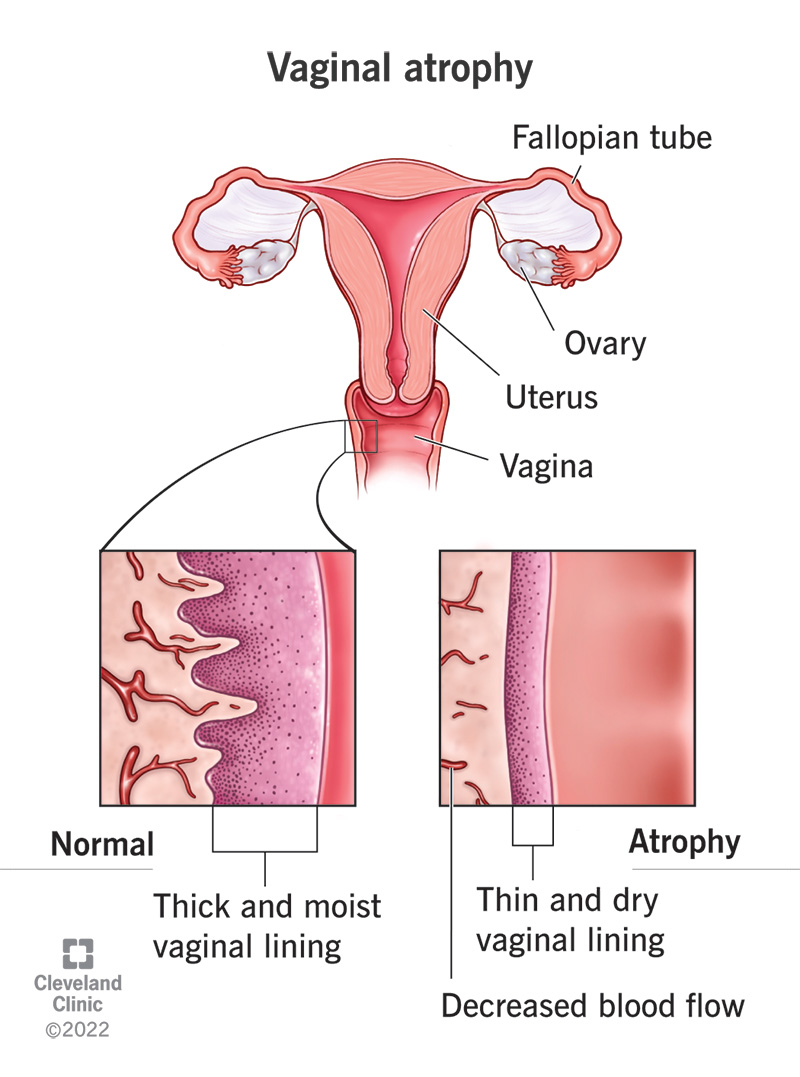
Vaginal atrophy is a condition where the lining of your vagina gets drier and thinner. This results in itching, burning, and pain during sex, among other symptoms. The condition also includes urinary tract problems such as urinary tract infections (UTIs) and urinary incontinence.
Vaginal atrophy most often occurs during perimenopause and menopause when your ovaries produce less estrogen. It can occur when your estrogen levels decrease due to cancer treatment or having your ovaries removed. You may experience many uncomfortable symptoms when hormone levels decrease. These symptoms can disrupt your quality of life.
How common is vaginal atrophy (GSM)?
At least half of women who enter menopause show signs and symptoms of genitourinary syndrome of menopause. Vaginal dryness is typically the first indication that you’re developing vaginal atrophy.
What causes vaginal atrophy (GSM)?
During menopause, your body makes less estrogen. Without estrogen, the lining of your vagina can become thinner and less stretchy. Your vaginal canal can also narrow and shorten. Less estrogen also lowers the amount of normal vaginal fluids and changes the acid balance in your vagina. All of these factors make your vaginal tissue more delicate and more likely to become irritated.
Your body can also produce less estrogen during events other than menopause. If you’re breastfeeding, receiving treatment for cancer, or have had your ovaries removed, you can experience vaginal atrophy due to lack of estrogen.
Who is at risk for getting vaginal atrophy (GSM)?
Women in menopause are the most likely to experience vaginal atrophy because their bodies naturally produce less estrogen. However, other factors can decrease estrogen levels and lead to vaginal atrophy. These include:
-
Decreased ovarian functioning due to chemotherapy or radiation therapy.
-
Medications that contain antiestrogen properties, including tamoxifen, medroxyprogesterone, and nafarelin.
-
Oophorectomy (removal of your ovaries).
-
Some birth control pills.
-
Immune disorders.
-
Breastfeeding.
-
Smoking cigarettes.
If you have penetrative sexual activity less often (with or without a partner), you may also have a higher risk of moderate to severe vaginal atrophy. Studies show that people who have sex more often tend to have milder cases of atrophy than those who stop having sex. This is because sexual stimulation increases blood flow to your vagina and makes your vaginal tissue more elastic.
Nonhormonal treatments for vaginal atrophy
There are several treatment options available that don’t involve hormones.
Lubricants and moisturizers
Lubricants and moisturizers treat vaginal dryness. This improves comfort during sex.
Vaginal lubricants should be used during intercourse to reduce friction and pain with sex.
Vaginal moisturizers adhere to the vaginal tissue to help the cells maintain moisture. They’re applied every one to three days as they’re longer acting.
Some natural oils, such as olive and coconut oil, may also be used as lubricants and moisturizers. Renew-V contains many of these oils already in its ingredient list.
Source – Cleveland Clinic. (n.d.). Vaginal atrophy: Causes, symptoms, diagnosis & treatment. Cleveland Clinic. Retrieved May 5, 2025, from https://my.clevelandclinic.org/health/diseases/15500-vaginal-atrophy